Today you are going to practise the use of the 3 types of Conditional Sentences. Please, first read the explanation with examples, and once you understand them, go ahead with the different activities proposed below. If you need more practice, the net is full of resources you can check at home.
1) Explanation:
First Conditional sentences
Second Conditional sentences
Third Conditional sentences
2) Practice:
Mixed Conditionals I
Mixed Conditionals II
Rewrite with conditinals
In class we have also learnt to form nouns adding suffixes. Here you one activity to practise more:
Suffixes
Suffixes
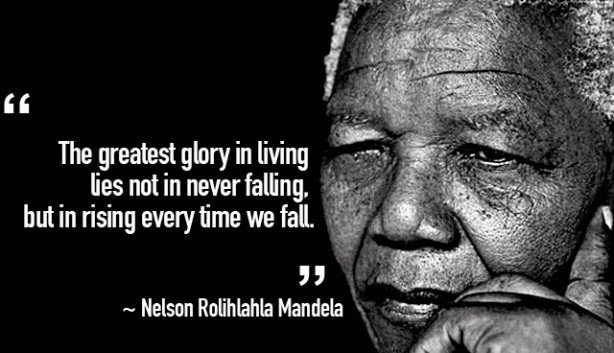
Quotes of the day
Wednesday, 27 April 2016
Sunday, 24 January 2016
2nd ESO TEST REVISION - UNITS 1-3
Your exam is coming soon! Let's practise with these activities. Click on the links below and follow the instructions. If you have questions, ask me in class! Good luck for your test!
GRAMMAR
1) PAST SIMPLE
3) PAST SIMPLE NEGATIVE
4) PAST CONTINUOUS
5) COMPARATIVE
6) SUPERLATIVE
7) PRESENT SIMPLE / CONTINUOUS (GAME)
GRAMMAR
1) PAST SIMPLE
3) PAST SIMPLE NEGATIVE
4) PAST CONTINUOUS
5) COMPARATIVE
6) SUPERLATIVE
7) PRESENT SIMPLE / CONTINUOUS (GAME)
Sunday, 20 September 2015
1st BATX - IDIOMS TO DESCRIBE PEOPLE
My dear students of Batxillerat, you can watch this video to get more idiomatic expressions about our Unit 1. You will learn more ways of describing people's character :)
Labels:
1st BATX,
IDIOMS,
personality
Sunday, 13 September 2015
WRITING CORRECTION
As I explained in class, when I correct your first writing assignment I will include some symbols to help you focus on your mistakes. Before the end of the week, you have to try to rewrite the essay again with possible solutions for your mistakes. I will give a grade to this second version. Of course, you are welcome to come to the department during the break to discuss any doubts.
Here is the list of symbol correction we discussed in class.
Writing Marking
Symbols
?:
not very clear
UI: unnecessary info
WO: word order
P: punctuation
WE: wrong
expression
GR: grammar
mistake
WW: wrong
word
SP: wrong spelling
Prep: wrong preposition
O : word repetition
CLASSROOM RULES
CLASSROOM RULES
Ø
Bring materials and homework.
Ø
Be on time in class.
Ø
Participate ACTIVELY and help your
partners
Ø
Use ENGLISH in the classroom.
Ø
Treat the classmates and teacher with
respect.
Ø
Respect classmates and teacher’s turn
to talk.
Ø
Raise your hand to ask a question.
Ø
Leave the class when the teacher
allows you.
Ø
Making mistakes is fine, it’s a way
of learning.
Ø
Work hard in class and at home. Do
your best!
Ø
Come to class with a smile J
Labels:
CLASS RULES
Monday, 3 March 2014
AMERICAN OR BRITISH ENGLISH?
Today I found this picture and I thought it would be nice to share it with you. It shows the main vocabulary differences between the American and the British English. I hope you learn more!
Tuesday, 17 December 2013
Saturday, 14 December 2013
CURIOSITIES: THE HISTORY OF THE SANDWICH
The word sandwich that we use today was born in London during the very late hours one night in 1762. It was named after John Montagu, the Fourth Earl[1] of Sandwich, an 18th century English aristocrat (1718-1792). As the story goes, in 1762, during a 24 hour gambling streak he instructed a cook to prepare his food in such a way that it would not interfere with his game. The cook presented him with sliced meat between two pieces of toast. Perfect! This meal required no utensils such fork or knife and could be eaten with one hand, leaving the other free to continue the game. The nobleman was able to continue his gambling while eating his snack and because Montagu also happened to be the Fourth Earl of Sandwich, others began to order "the same as Sandwich!". It is said that Lord Sandwich was fond of this form of food because it allowed him to continue playing cards, particularly cribbage, while eating without getting his cards greasy from eating meat with his bare hands.
From that incident, we have inherited that quick-food product that we now know as the sandwich. Sadly, the name of real inventor of the sandwich (be it inventive cook or the creative consumer) was not recorded for posterity. Besides the more obvious meaning of sandwich, "something edible between two or more slices of bread", metaphorically speaking, it also means "to squeeze in between two other people, places, things, materials, etc. "For example: Her car was sandwiched between two other cars in the parking lot.
Earl[1]= it's a title of nobility from Great Britain that means "count", like Count Dracula.
From that incident, we have inherited that quick-food product that we now know as the sandwich. Sadly, the name of real inventor of the sandwich (be it inventive cook or the creative consumer) was not recorded for posterity. Besides the more obvious meaning of sandwich, "something edible between two or more slices of bread", metaphorically speaking, it also means "to squeeze in between two other people, places, things, materials, etc. "For example: Her car was sandwiched between two other cars in the parking lot.
Earl[1]= it's a title of nobility from Great Britain that means "count", like Count Dracula.
Labels:
CULTURE,
traditions
Friday, 6 December 2013
Thursday, 5 December 2013
TEST YOUR LEVEL
Do you want to know your level of English? Check the following website and do the two level tests (grammar/vocabulary and listening) . It is also a good website to practise for the CEF levels exams (A1, A2, B1, B2, C1, C2)
Note: Take this test as a reference. It can't be 100% reliable as it doesn't contain any reading, writing or speaking assessment
http://www.examenglish.com/leveltest/index.php
Note: Take this test as a reference. It can't be 100% reliable as it doesn't contain any reading, writing or speaking assessment
http://www.examenglish.com/leveltest/index.php
2nd BATX - GERUND & INFINITIVE
Do you need more practice? This link contains a tutorial of Gerunds and Infinitives and many exercises to check your progress. http://www.englishpage.com/gerunds/
SEARCHING FOR SUGAR MAN
"Searching for Sugar Man" is a documentary about the unknown and mysterious singer Sixto Rodriguez. A true story that was awarded an Oscar as best documentary in 2013. It is an inspiring story that will make a difference! Here is "I wonder" one of the soundtrack songs. Hope you like it too
Labels:
SONGS
Saturday, 30 November 2013
2n BATX - MIXED TENSES REVISION
If you need to practise verb tenses, here you have some activities. Click on them:
Activity 1 Gap filling
Activity 2 Past Simple / Past Perfect
Activity 3 Future mix
Activity 4 Mixed tenses
Labels:
2nd Batxillerat,
Grammar,
TENSES
2n BATX- IDIOMS (2) BLUE COLOUR
Let's learn some more idioms! This time related to the BLUE colour!
Labels:
2nd Batxillerat,
IDIOMS
WHAT A WONDERFUL WORLD (Playing For Change)
Playing for Change is a multimedia movement created to inspire, connect, and bring peace to the world through music. Musicians from all over the world participate in this project which aims to promote music and arts education. If you like music, you will enjoy the different videos they have released.
Friday, 29 November 2013
MOVEMBER IN NOVEMBER!
Movember happens every November. In November, men (and women - theoretically) are encouraged to grow mustaches around the world. With their "Mos", the men engage in fundraising that researches issues related to men's health, specifically prostate cancer and other campaigns.
Read more here!
Read more here!
Labels:
CULTURE,
traditions
Friday, 22 November 2013
2n BAT MODAL REPHRASINGS & IDIOMS ANSWER KEY
Modal rephrasing:
Here you have the remaining modal sentences
25) I'm sure something is happening tonight. Look at those preparations! (deduction)
Something must be happening. Look at those preparations!
26) It's compulsory for all students to attend lessons. (obligation)
Students must attend lessons.
27) It's possible that they move to Australia. (probability)
They may / might move to Australia.
28) I'm sure Helen knows about the accident. She looks very unhappy. (certainty)
Helen must know about the accident. She looks very unhappy.
29) Perhaps he hired a vannette. (Probability of a past action)
He might have hired a vannette.
30) You are not allowed to use the phone without permission. (prohibition)
You mustn't / can't use the phone without permission.
31) If I were you, I wouldn't trust John. (giving advice)
You shouldn't / had better not trust John.
32) I'm sure she didn't take the key. (certainty of a past action)
She can't/ couldn't have taken the key.
33) Perhaps I start a new career. (probability)
I might / may start a new career.
34) It was not necessary for you to tell Jan what really happened. (some past action was unnecessary)
You needn't have told Jan what really happened.
35) I regret selling the house. (we regret a past action)
I shouldn't have sold the house.
36) It's compulsory for all visitors to show their ID card. (obligation)
All visitors must show their ID card.
IDIOMS DEFINITIONS
1- Go down a storm : when something it's been enjoyable or successful
2- Every cloud has a silver lining: in every situation we can see something positive.
3- Steal someone's thunder : to take credit and praise for something somebody else did.
4- Shoot the breeze: to have an informal conversation about silly things.
5- Down in the doldrums: be depressed and without energy. It's more common the expression: to be down with the blues.
Here you have the remaining modal sentences
25) I'm sure something is happening tonight. Look at those preparations! (deduction)
Something must be happening. Look at those preparations!
26) It's compulsory for all students to attend lessons. (obligation)
Students must attend lessons.
27) It's possible that they move to Australia. (probability)
They may / might move to Australia.
28) I'm sure Helen knows about the accident. She looks very unhappy. (certainty)
Helen must know about the accident. She looks very unhappy.
29) Perhaps he hired a vannette. (Probability of a past action)
He might have hired a vannette.
30) You are not allowed to use the phone without permission. (prohibition)
You mustn't / can't use the phone without permission.
31) If I were you, I wouldn't trust John. (giving advice)
You shouldn't / had better not trust John.
32) I'm sure she didn't take the key. (certainty of a past action)
She can't/ couldn't have taken the key.
33) Perhaps I start a new career. (probability)
I might / may start a new career.
34) It was not necessary for you to tell Jan what really happened. (some past action was unnecessary)
You needn't have told Jan what really happened.
35) I regret selling the house. (we regret a past action)
I shouldn't have sold the house.
36) It's compulsory for all visitors to show their ID card. (obligation)
All visitors must show their ID card.
IDIOMS DEFINITIONS
1- Go down a storm : when something it's been enjoyable or successful
2- Every cloud has a silver lining: in every situation we can see something positive.
3- Steal someone's thunder : to take credit and praise for something somebody else did.
4- Shoot the breeze: to have an informal conversation about silly things.
5- Down in the doldrums: be depressed and without energy. It's more common the expression: to be down with the blues.
Wednesday, 20 November 2013
2n BAT PRONUNCIATION (1)
To start with pronunciation practice, I want you to watch this video and get some tips to help you with your pronunciation skills. It's obvious that we are not native speakers, but you can improve your pronunciation by listening to the news in English or watching original version films. Here I give you a website link where you will find information and activities to practise. Remember that in your University entry exam there will be one question related to pronunciation (1 point) where you will have an odd-one-out activity.
Website for pronunciation: http://www.bbc.co.uk/worldservice/learningenglish/grammar/pron/
PHONETIC CHART
Become familiar with the different sounds.
http://www.pearsonlongman.com/phonetic-chart.html
Sunday, 17 November 2013
2nd BAT - MODAL AND MODAL PERFECT VERBS
Have a look at this presentation and then click on the activities to practise
Subscribe to:
Posts (Atom)